English Tutoring
Our online English tutoring is built around matching you with the right tutor
English tutors are typically undergraduates/graduates of degrees such as English Literature, English with Journalism and Creative Writing, English Literature and History of Art, English Language and Literature and English and Comparative Literature. Most English tutors have straight A grades up to Advanced Higher level and are achieving 1st averages.
We offer English tutoring at Primary, S1-2, National 4, National 5, Higher, Advanced Higher and University level. Other qualifications available upon request.
National 4 English develops skills in reading and writing, with a focus on understanding and producing straightforward texts. The course is internally assessed and is not graded. Students must pass all units and complete an Added Value Unit.
- Analysis and Evaluation (internal assessment)
- Creation and Production (internal assessment)
- Literacy (internal assessment)
- Added Value Unit – English Assignment
The course requires students to understand and respond to straightforward texts, create written and spoken pieces for clear purposes, and apply their skills in a short assignment.
Key Areas of the Course
Analysis and Evaluation
- Understanding straightforward texts in literature, language and media
- Identifying main ideas and supporting detail
- Explaining how language creates meaning
- Making simple evaluative comments
Creation and Production
- Producing straightforward written texts for a clear purpose
- Organising ideas logically
- Demonstrating basic technical accuracy
- Delivering a short presentation
Literacy
- Reading for information in everyday contexts
- Writing clearly for practical purposes
- Listening for key ideas
- Communicating clearly in speech and writing
Added Value Unit
- Selecting and researching a topic
- Presenting findings in writing or orally
- Applying reading and writing skills in a short assignment
Students often need support with:
- Answering questions in their own words rather than copying from the text.
- Explaining ideas clearly instead of giving very brief or unclear responses.
- Structuring written answers logically with clear paragraphs.
- Using evidence from a text to support an answer.
- Planning and organising extended pieces of writing.
Maintaining basic technical accuracy in spelling and punctuation.
Students working towards National 4 may, where appropriate, also develop some aspects of National 5 work alongside this course.
National 5 English develops skills in reading and writing, with a strong emphasis on understanding, analysing and producing detailed texts.
Students are assessed through:
Reading for Understanding, Analysis and Evaluation (RUAE) – 30%
Critical Reading (Scottish text + critical essay) – 40%
Portfolio Writing – 30%
The course requires students to understand and analyse detailed texts, construct structured critical essays and produce original writing.
Key Areas of the Course
Reading for Understanding, Analysis and Evaluation (RUAE)
- Unseen non-fiction passage
- Understanding in own words
- Analysis of language (word choice, imagery, sentence structure, tone, structure)
- Evaluation of impact and effectiveness
- Summary skills
- Critical Reading
Scottish Text
- Extract-based analysis
- Linking to the rest of the text
- Close reference and technique analysis
Critical Essay
- Structured response to a set question
- Knowledge of text
- Analysis of techniques
- Sustained line of argument
Portfolio Writing
- One piece of writing (maximum 1,000 words)
- Broadly creative (e.g. short story, personal essay, poetry)
- or Broadly discursive (e.g. persuasive essay, argumentative essay, report)
Students often need support with:
- Answering RUAE questions precisely in their own words, avoiding copying directly from the passage.
- Analysing techniques properly, moving beyond identifying a device to explaining its effect.
- Structuring critical essays, especially sustaining a clear line of argument rather than retelling the story.
- Using evidence effectively, integrating quotations smoothly and analysing them rather than listing them.
- Understanding what evaluation requires, particularly commenting on impact and effectiveness.
- Managing time in the exam, especially balancing the Scottish text and the critical essay.
- Maintaining technical accuracy in portfolio writing, ensuring paragraphing, sentence control and punctuation are secure.
Higher English tutoring focuses on helping students move from competent National 5 performance to confident, independent analysis. At this level, answers must be more detailed, more precise and more conceptually secure. Students are expected not just to identify techniques, but to analyse how they contribute to meaning and evaluate their overall impact.
Reading for Understanding, Analysis and Evaluation – 30%
Critical Reading (Scottish text + critical essay) – 40%
Portfolio Writing – 30%
Lessons are adapted to the student’s current position in the course. Some require structured support with essay technique and exam timing, while others need deeper work on interpretation, argument and expression.
Key Areas of the Course
Reading for Understanding, Analysis and Evaluation (RUAE)
- Two unseen non-fiction passages linked by theme
- Understanding ideas and viewpoints in own words
- Analysis of language (word choice, imagery, sentence structure, tone, structure)
- Evaluation of impact and effectiveness
- Comparison of viewpoints across two texts
- Summary of key areas of agreement or disagreement
Scottish Text
- Extract-based analysis
- Detailed analysis of character, theme and technique
- Evaluation of writer’s methods and overall impact
- Linking the extract to elsewhere in the text or other poems or stories by the same writer
Critical Essay
- Structured response to a set question
- One previously studied text (different genre from Scottish text)
- Sustained line of argument throughout
- Detailed textual reference and analysis of techniques
- Evaluation of effectiveness and impact
- Consistent technical accuracy
Portfolio Writing
- One piece of writing (maximum 1,300 words)
- Broadly creative (e.g. short story, reflective essay, poetry, drama)
- or Broadly discursive (e.g. argumentative essay, persuasive essay, report)
- Clear control of structure, expression and technical accuracy
Students often need support with:
- Developing deeper analysis rather than relying on description or retelling
- Constructing and sustaining a clear line of argument in critical essays
- Writing with consistent technical accuracy under exam conditions
- Analysing unseen non-fiction passages efficiently and confidently in RUAE
- Linking detailed textual evidence clearly to theme and central concerns
- Refining expression so ideas are conveyed clearly, precisely and academically
Tutoring typically includes:
- Structured practice of RUAE skills, including summarising, analysing language and comparing viewpoints
- Close analysis of Scottish texts and preparation for extract-based questions
- Essay planning frameworks that help students build coherent and sustained arguments
- Timed practice to build exam confidence
- Targeted feedback on portfolio writing to improve clarity, structure and impact
Advanced Higher English focuses on the critical and creative study of complex literature and language. Tutors typically support students to develop more independent, evidence-led analysis and produce higher-level writing across exam and coursework components.
Literary Study Question Paper – 20%
Textual Analysis Question Paper – 20%
Portfolio-Writing – 30%
Project–Dissertation – 30%
Key Areas of the Course
Literary Study (Previously Studied Texts)
One critical essay on previously studied texts from a single genre: poetry, prose fiction, prose non-fiction or drama.
- Comparative understanding of more than one text within the chosen genre
- Detailed analysis of theme, character, structure and technique
- Sustained, conceptual line of argument
- Precise textual reference and evaluation of authorial choices
Textual Analysis (Unseen Text)
- One unseen text/extract from poetry, prose fiction, prose non-fiction, or drama, requiring a detailed critical analysis.
- Students often need support with:
- Building a clear line of argument rather than writing “commentary” paragraphs
- Selecting precise evidence and integrating quotations smoothly
- Writing analysis that explains how technique creates meaning (not feature-spotting)
- Maintaining focus on the question throughout (especially when comparing texts)
- Developing an evaluative stance that is justified by the text
Portfolio–Writing (30%)
Advanced Higher English includes a portfolio-writing component where students submit one piece of writing in a chosen genre (persuasive, informative, argumentative, reflective, poetry, prose fiction, or drama). The first draft must be completed in class under supervision (up to 4 hours, which can be split across sessions).
Support can include:
- Choosing a suitable genre and focus that matches strengths and assessment requirements
- Planning structure, tone, and purpose clearly before drafting
- Improving clarity, control, and technical accuracy through targeted feedback on one draft only
- Support focuses on developing skills and understanding, not completing work for the student.
Project–Dissertation (30%)
Students complete an independent dissertation on an aspect of literature, based on untaught text(s), with a required length of 2,500–3,500 words. Texts used for the dissertation must not be used for the Literary Study question paper.
Support can include:
- Helping refine a focused dissertation task that is manageable and analytical (not too broad)
- Structuring an argument and selecting evidence that stays tightly linked to the task
- Guiding research habits and referencing expectations (while maintaining authenticity)
- Feedback on draft
Our Process
How Matching Works
Finding the right tutor shouldn’t feel like guesswork. We take the time to understand your needs, recommend the most suitable tutor, and support you as you go – so you can focus on progress, not admin.
Step 1: Understanding What’s Needed
A short conversation or message helps us identify:
- What you are hoping tutoring will achieveSubject and level
- Areas the student would like support with
- Availability for lessons
Step 2. Recommending a Suitable Tutor
We suggest a tutor based on:
- Availability that allows consistent lessons
- Experience with the relevant qualification level
- Ability to explain the subject clearly
- A teaching approach suited to the student
Step 3: Lessons Begin
Once timings are agreed, lessons start and continue on a regular basis that suits the student. There is no long-term contract, so families can decide how long they would like tutoring to continue. If circumstances change, we can help adjust arrangements where appropriate.
Why us
Why Caledonia Tutors
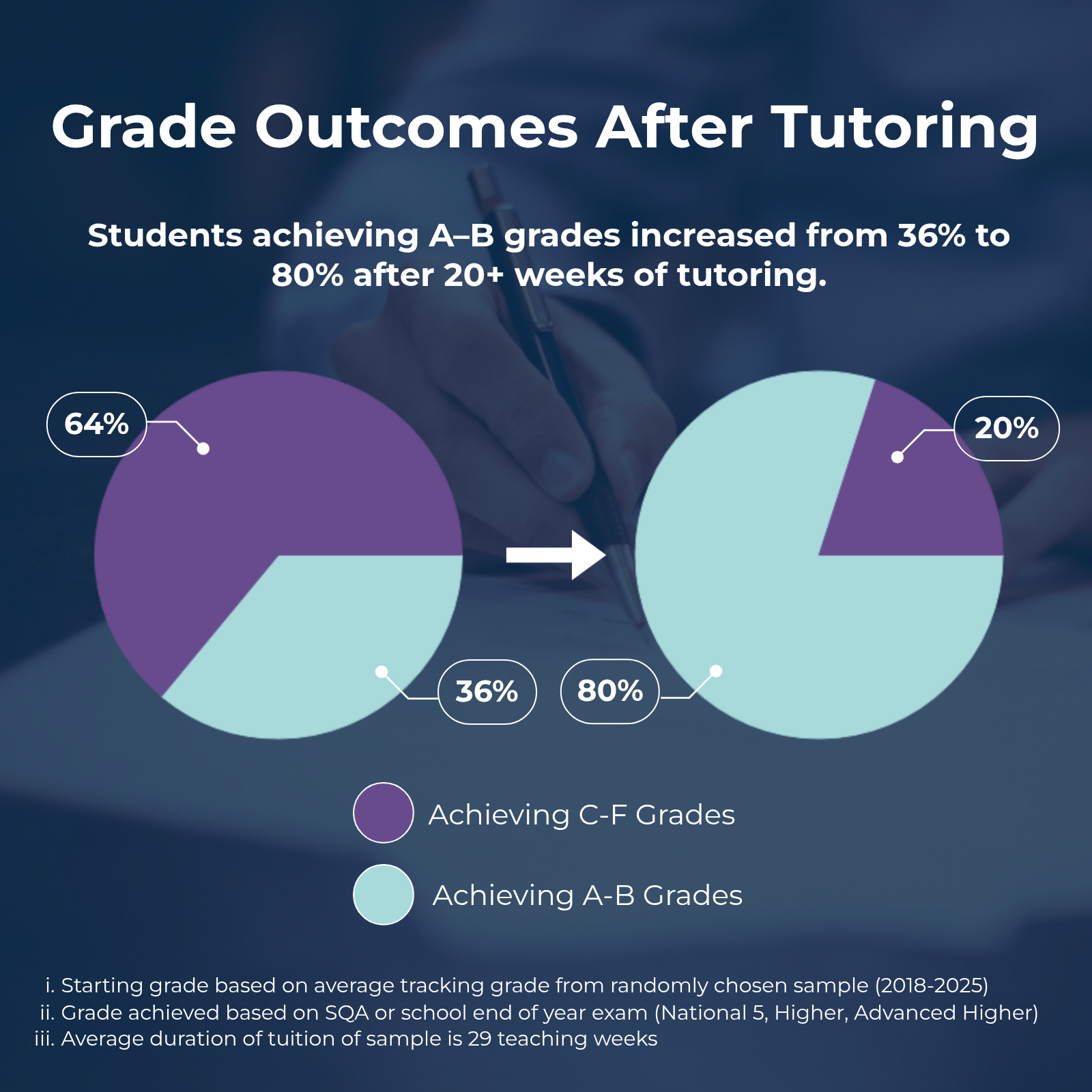
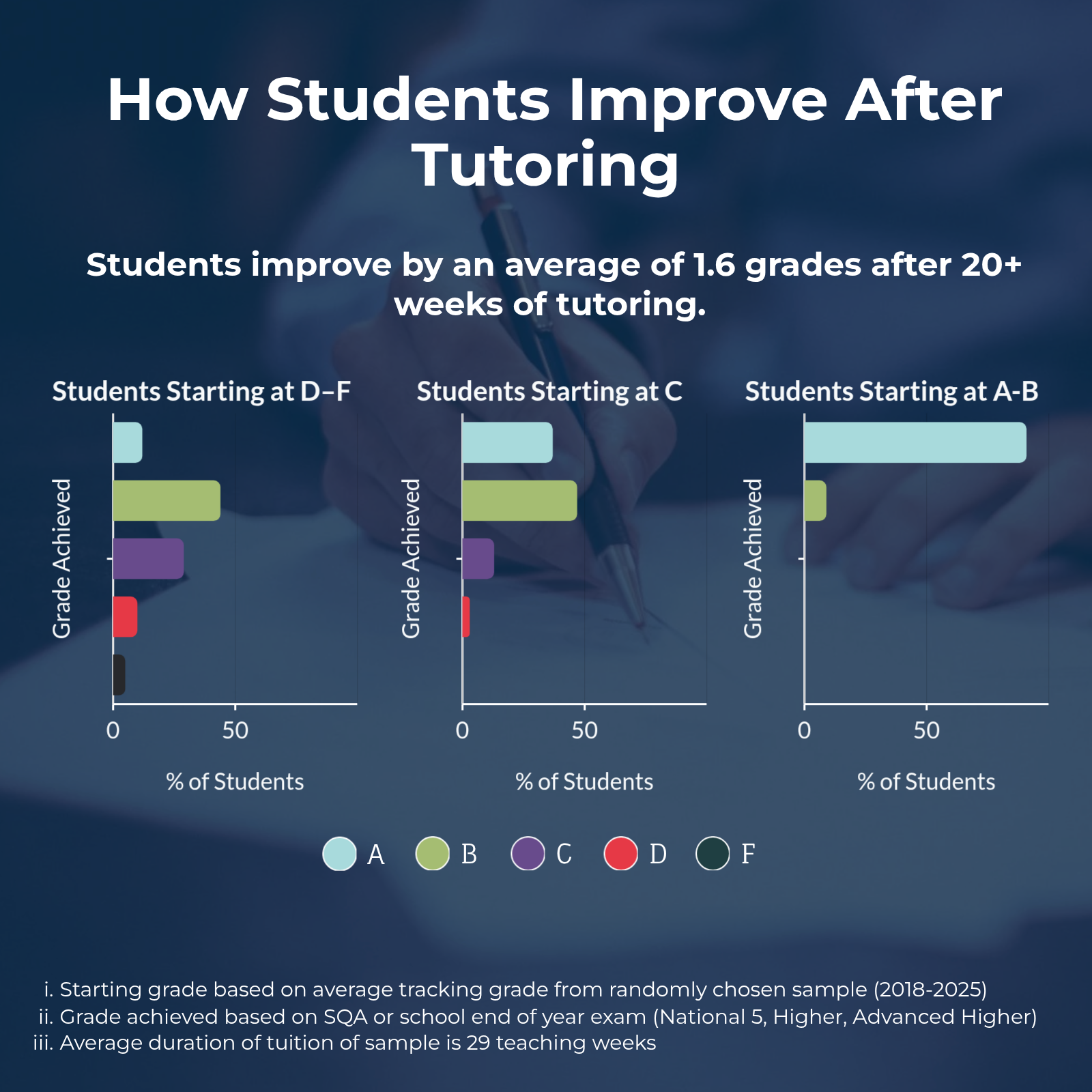
We’re proud of what we’ve achieved so far. Here are a few key figures that show the impact we’re making:
Simple, Transparent Pricing
We aim to keep pricing clear and transparent, with options to suit different subjects and study levels. See our latest pricing and how it works.
Find an English Tutor
If you would like us to recommend a tutor, simply get in touch and let us know the subject, level, and any preferred timings. We will come back to you with a suitable option and the next steps.
Complete the form below to begin the process of finding a tutor