Biology Tutoring
Our online Biology tutoring is built around matching you with the right tutor
Biology tutors are typically undergraduates/graduates of degrees such as Immunology, Biological Sciences, Medicine, Molecular and Cellular Biology and Veterinary Medicine.
Most Biology tutors have straight A grades up to Advanced Higher level and are achieving 1st averages. We offer Biology tutoring at S1-2, National 4, National 5, Higher, Advanced Higher and University level. Other qualifications available upon request.
National 5 Biology focuses on building strong foundations while introducing students to exam-style questions and data interpretation. Lessons are adapted to the student’s current level, whether they need help with specific topics or more structured revision across the course.
Topics Covered
Tutors support students across the full National 5 Biology course, including:
- Cell structure, transport and division
- DNA, protein production and enzymes
- Photosynthesis and respiration
- Genetic engineering and inheritance
- Cells, tissues, organs and transport systems
- Reproduction, variation and biodiversity
- Ecosystems, sampling techniques and human impact
Lessons can focus on specific topics or follow the course unit-by-unit, depending on the student’s needs.
Common Challenges at National 5
National 5 Biology students often struggle with::
- Retaining and applying biological knowledge
- Interpreting data, graphs and tables
- Calculation-based questions
- Longer “explain” and “describe” questions
- Managing time effectively in exams, particularly multiple-choice sections
Tutoring focuses on strengthening understanding, building confidence with exam-style questions, and developing clear, structured answers using appropriate biological terminology.
Higher Biology requires deeper understanding and the ability to apply knowledge accurately in unfamiliar contexts. Lessons are more analytical than National 5 and place greater emphasis on interpretation, reasoning, and structured extended responses.
Unit 1: DNA and the Genome
Topics commonly covered include:
- DNA structure and replication
- Gene expression and regulation
- Protein synthesis and cellular differentiation
- Mutations and evolution
- Genome organisation and sequencing
Students often need support with:
- Explaining processes clearly rather than listing steps
- Applying gene expression concepts to unfamiliar scenarios
- Using accurate biological terminology consistently in longer answers
Unit 2: Metabolism and Survival
Topics commonly covered include:
- Metabolic pathways and their control
- Cellular respiration
- Enzyme regulation and conformational change
- Metabolic rate and environmental influences
- Genetic control of metabolism
Common challenges at this stage include:
- Interpreting pathway diagrams and experimental data
- Explaining cause-and-effect in metabolic control
- Linking environmental conditions to metabolic responses
Unit 3: Sustainability and Interdependence
Topics commonly covered include:
- Food supply and agricultural systems
- Plant and animal breeding
- Crop protection and animal welfare
- Symbiosis and social behaviour
- Biodiversity, conservation, and human impact
Students often struggle with:
- Structuring longer evaluative answers
- Applying knowledge to unfamiliar case studies
- Avoiding vague or descriptive-only response
Higher Biology Assignment
Higher Biology also includes a mandatory assignment which contributes to the final grade. Support can include:
- Understanding what the assignment is assessing
- Processing and presenting data appropriately
- Writing clear discussions, evaluations and conclusions using accurate biological language
Support focuses on developing skills and understanding, not completing work for the student.
Advanced Higher Biology is closer to first-year university Biology (Same SCQF level) than it is to Higher. Success depends not only on understanding complex biological systems, but on being able to explain mechanisms precisely, interpret unfamiliar data confidently, and evaluate research methods and conclusions.
Unit 1: Cells and Proteins
Topics commonly covered include:
- Laboratory techniques for biologists (including health & safety, solutions, separation techniques, microscopy and aseptic technique)
- Proteomics and protein structure (binding, conformational change, and hydrophobic/hydrophilic interactions)
- Membrane proteins and transport (movement across membranes, ion transport, channels and signalling)
- Detecting and amplifying environmental stimuli (photoreceptor systems and biological response pathways)
- Communication within multicellular organisms (hydrophobic/hydrophilic signalling, transduction and control of transcription)
- Protein control of cell division (cytoskeleton, cell cycle control, apoptosis and regulation mechanisms)
Where students often need the most support:
- Turning complex pathways into clear, mark-winning explanations (rather than vague “storytelling”)
- Interpreting experimental evidence behind models of protein function, signalling, and regulation
- Using correct terminology consistently when describing mechanisms at molecular level
Unit 2: Organisms and Evolution
Topics commonly covered include:
- Field techniques for biologists (sampling, identification/taxonomy, measuring behaviour and monitoring populations)
- Evolution (selection, drift, rates of evolution, co-evolution and related models)
- Variation and sexual reproduction (costs/benefits, meiosis, gametes, sex determination)
- Sex and behaviour (sexual selection and courtship)
- Parasite niche, transmission and virulence (including parasite-host dynamics and transmission pathways)
- Immune responses to parasites (non-specific and specific defence)
- Parasite life cycles and viruses
- Challenges in treatment and control (biological control measures and real-world constraints)
Where students often need the most support:
- Applying evolutionary reasoning to unfamiliar scenarios (rather than repeating definitions)
- Writing strong evaluative answers that balance evidence, trade-offs, and limitations
- Handling data-heavy questions involving populations, transmission, and experimental field methods
Unit 3: Investigative Biology
This part is a major separator between Higher and Advanced Higher. It focuses on research thinking, not memorisation.
Topics commonly covered include:
- Scientific principles and process (scientific method, communication, literature use, ethics)
- Experimentation (pilot studies, variables, controls, sampling, reliability and error)
- Critical evaluation of biological research (assessing design, data analysis, conclusions, and validity)
Where students often need the most support:
- Designing investigations with appropriate controls, manageable variables and defensible methodology
- Evaluating experimental design and conclusions without being vague (“it could be wrong”)
- Interpreting what statistical results and data presentation actually imply, including limitations
Investigation / project support
Advanced Higher typically involves an investigation component alongside exam preparation. Support can include:
- Refining research questions so they’re specific, testable and realistically achievable
- Planning methods, controls and sampling approaches that stand up to scrutiny
- Presenting results clearly (tables/graphs) and explaining what the data shows
- Writing discussion and evaluation sections that address limitations and improvements properly
- Using sources appropriately and avoiding superficial referencing
Support focuses on developing the student’s understanding and independence, not completing work for them.
Common challenges at Advanced Higher
Advanced Higher students often struggle with:
- The jump from “knowing content” to “explaining mechanisms precisely”
- Applying ideas to unfamiliar data and experimental contexts
- Structuring longer answers with clarity, logic and correct terminology
- Evaluating research critically in a way that is specific and evidence-based
- Managing the investigation workload alongside other subjects
Tutoring is usually most effective when it combines targeted content work with regular practice on data interpretation, extended responses, and evaluation-style Past Paper questions.
Advanced Higher Biology Assignment
Advanced Higher Biology includes a mandatory project worth 30 marks (scaled to 40), contributing 25% of the overall course award
The project involves an in-depth, independently planned investigation of a biological topic. Students design and carry out their own experiment, analyse data and produce a structured scientific report including abstract, introduction, procedures, results, discussion and evaluation.
Support can include:
- Support focuses on developing independence, scientific reasoning and precise scientific communication.ontent
- Understanding the marking criteria and structure of the report
- Refining a clear aim and testable hypothesis
- Designing valid procedures with appropriate controls and sample size
- Processing and analysing data accurately, including graphs and statistical interpretation
- Writing justified conclusions and evaluating reliability, validity and sources of error
Our Process
How Matching Works
Finding the right tutor shouldn’t feel like guesswork. We take the time to understand your needs, recommend the most suitable tutor, and support you as you go – so you can focus on progress, not admin.
Step 1: Understanding What’s Needed
A short conversation or message helps us identify:
- What you are hoping tutoring will achieveSubject and level
- Areas the student would like support with
- Availability for lessons
Step 2. Recommending a Suitable Tutor
We suggest a tutor based on:
- Availability that allows consistent lessons
- Experience with the relevant qualification level
- Ability to explain the subject clearly
- A teaching approach suited to the student
Step 3: Lessons Begin
Once timings are agreed, lessons start and continue on a regular basis that suits the student. There is no long-term contract, so families can decide how long they would like tutoring to continue. If circumstances change, we can help adjust arrangements where appropriate.
Why us
Why Caledonia Tutors
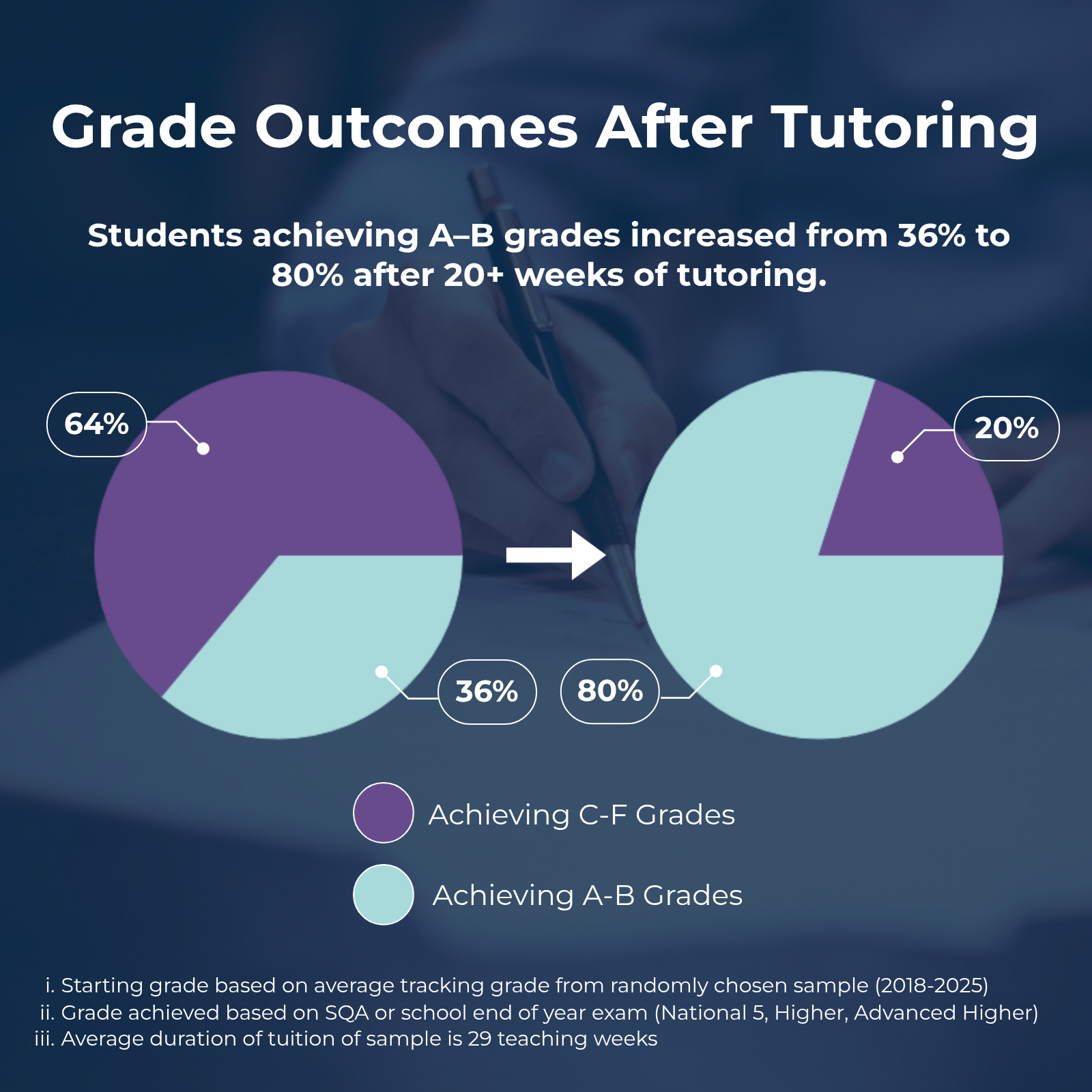
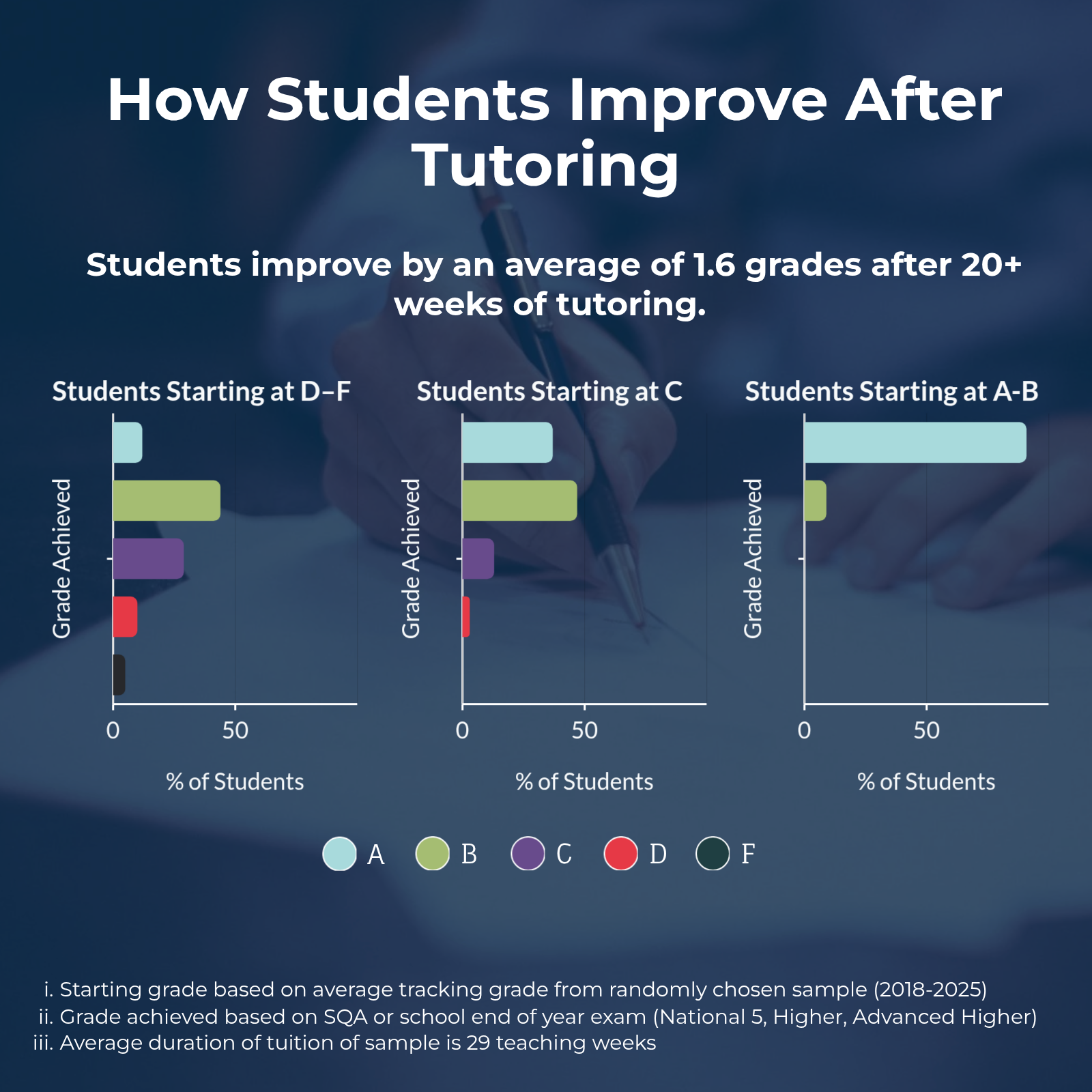
We’re proud of what we’ve achieved so far. Here are a few key figures that show the impact we’re making:
Simple, Transparent Pricing
We aim to keep pricing clear and transparent, with options to suit different subjects and study levels. See our latest pricing and how it works.
Find a Biology Tutor
If you would like us to recommend a tutor, simply get in touch and let us know the subject, level, and any preferred timings. We will come back to you with a suitable option and the next steps.
Complete the form below to begin the process of finding a tutor